

-
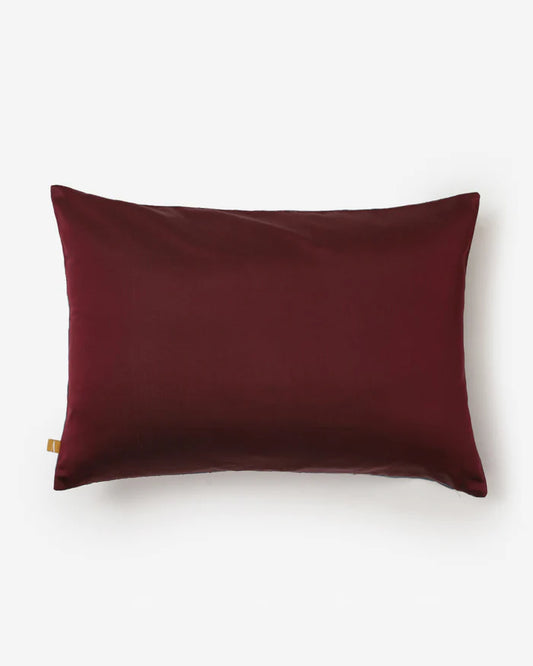
Forest Tanchoi: Merlot Woodland Silk Pillow
Regular price $110 USDRegular price -
Midnight Garden Banarasi Lumbar Pillow
Regular price $240 USDRegular price -
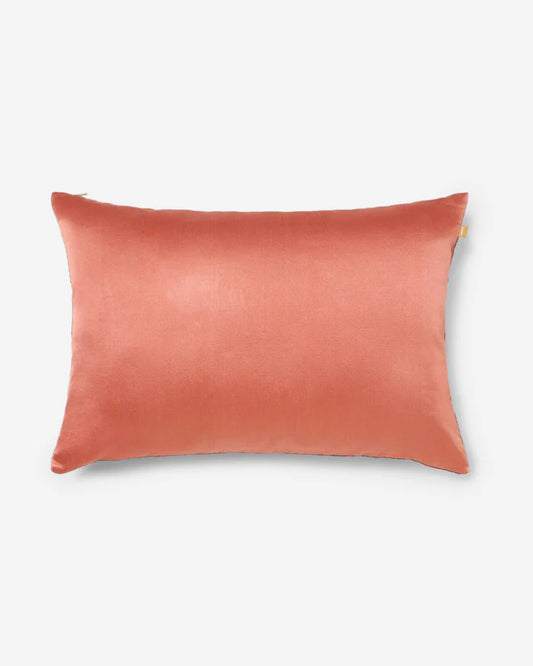
Anār Pomegranate Silk Lumbar Pillow
Regular price $110 USDRegular price -
Blush Diamond Ikat Lumbar Pillow
Regular price $110 USDRegular price -
Forest Green Heritage Gyasar Pillow
Regular price $200 USDRegular price -
Rose-Vine Scroll Gyasar Pillow
Regular price $220 USDRegular price -
Powder Blue & Rose Banarasi Silk Pillow
Regular price $120 USDRegular price -
Sage Green Ikat Silk Pillow
Regular price $170 USDRegular price -
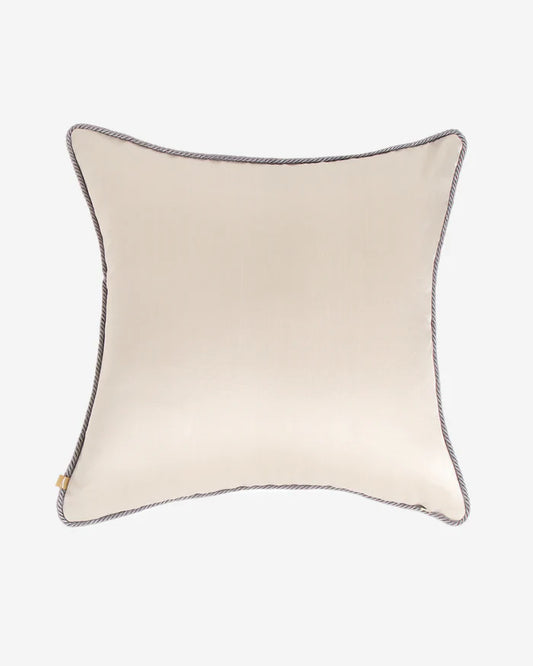
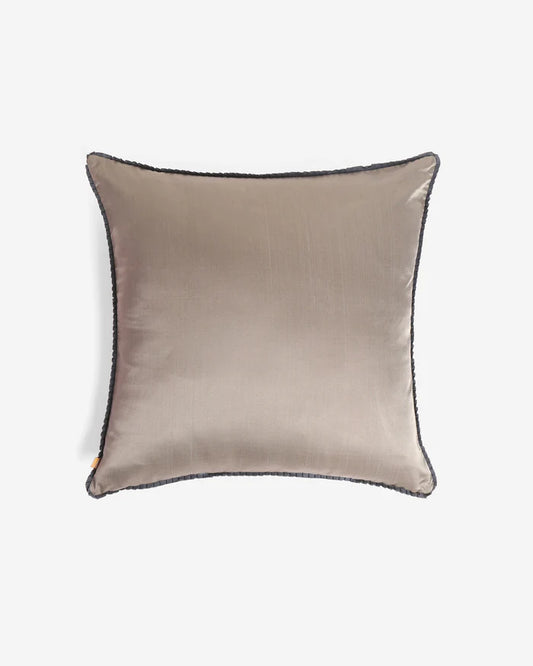
Silver Brocade Cushion
Regular price $80 USDRegular price -
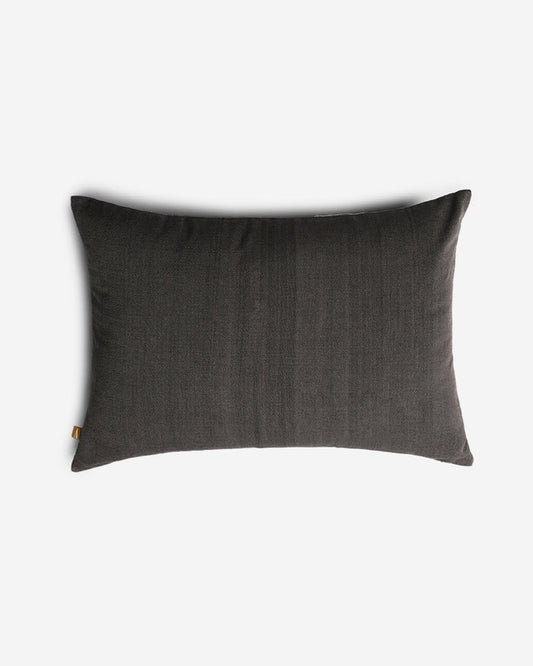
Charcoal Grey Bhujodi Cotton Lumbar Pillow
Regular price $120 USDRegular price -
Emerald Iris Gyasar Silk Pillow
Regular price $240 USDRegular price -
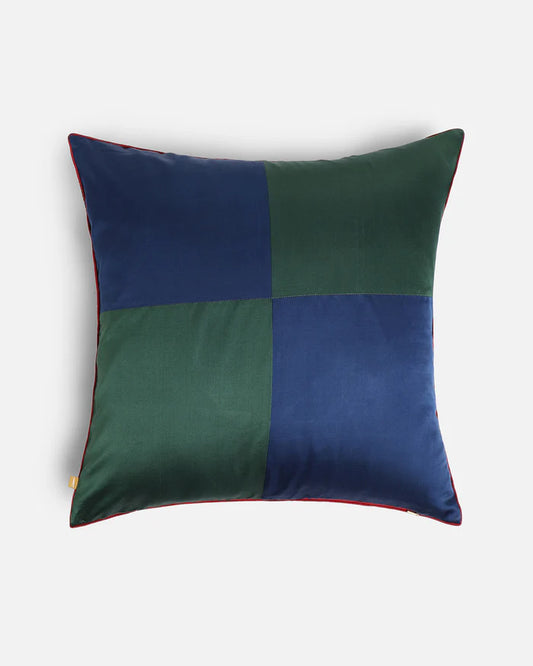
Samarkand Navy Gyasar Silk Pillow
Regular price $240 USDRegular price -
Sage & Ivory Banarasi Silk Lumbar Pillow
Regular price $120 USDRegular price -
Lotus Aqua Gyasar Silk Pillow
Regular price $220 USDRegular price -
Moonlit Silver Laleh Gyasar Pillow
Regular price $220 USDRegular price -
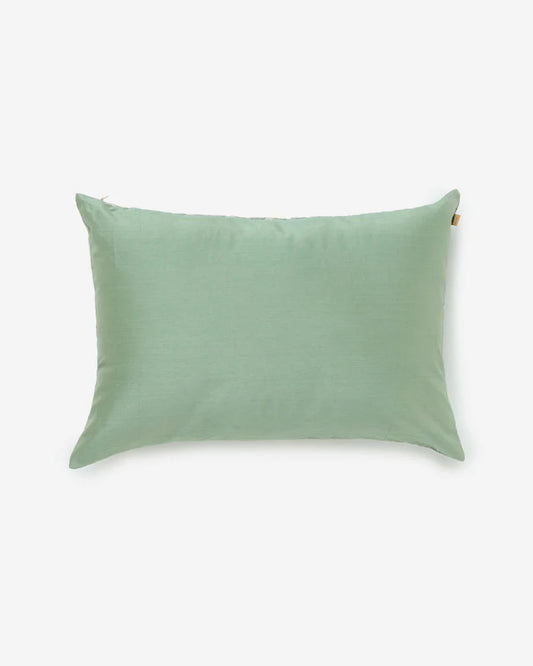
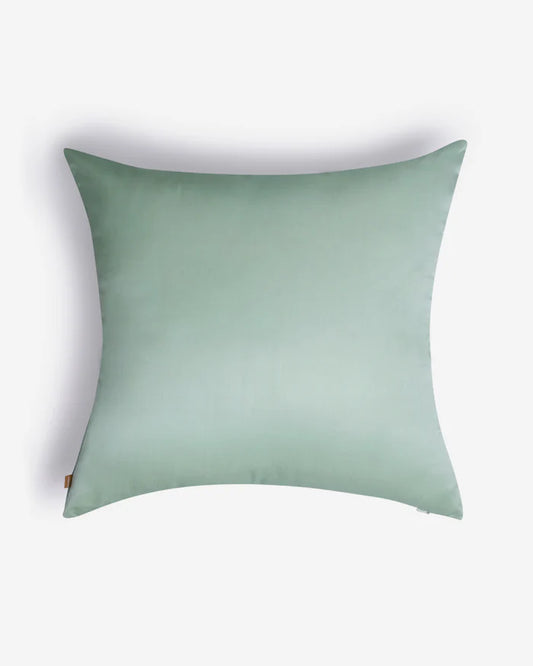
Seafoam Green Banarasi Silk Pillow - Tonal Fern
Regular price $110 USDRegular price

















The Narrative of the Loom
Decoding the ancient language of thread and time

Banarasi, Tanchoi, and Ikat: A Guide to Varanasi’s Three Great Weaves
Banarasi, tanchoi, and ikat are three distinct silk-weaving traditions associated with Varanasi (Banaras), India. Banarasi is a brocade woven with metallic zari thread to create...
Explore the Craft
Discover other Collections
-

Tanchoi Silk
Tanchoi was brought to Varanasi from China in the 19th century. The...
-

Ikat Silk Cushions & Table Runners
Ikat is one of the most technically demanding weaving traditions practised in...
-

Hand-Knotted Rugs
A hand-knotted rug is made knot by knot — thousands per square...


Common Questions
What is the difference between real ikat and printed ikat?
Real ikat and printed ikat look almost identical in photographs but are structurally different objects. In genuine ikat, the pattern is dyed into the yarn before a single thread is woven — so it exists in the thread itself and appears on both sides of the finished cloth. In printed ikat, a plain woven fabric is stamped with an ikat-like pattern on one side only. The fastest way to tell them apart: turn the fabric over. Genuine ikat shows the pattern on both faces. The second tell is the edge — genuine ikat has a characteristic soft, feathered blur where colours meet, because pre-dyed yarns shift fractionally during weaving and perfect registration is impossible. That blur is not a defect; it is the proof of authenticity. A printed copy will have hard, perfectly sharp colour boundaries and a clean reverse.
Why do ikat patterns have a blurred or feathered edge?
The soft, feathered edge in ikat is caused by the nature of resist-dyeing yarn before weaving. Each yarn bundle is tied and dyed to a pattern, then placed on the loom. As the pre-dyed threads are woven, they shift fractionally with each pass of the shuttle. Perfect colour registration is structurally impossible — wherever one colour meets another, the boundary softens and feathers. This is the technique's defining characteristic, not a flaw. It is also the most reliable way to identify genuine handwoven ikat: if the edges are perfectly crisp and the pattern appears on one side only, you are looking at printed ikat, not woven. Genuinely woven ikat has soft edges and the same pattern on both faces of the cloth.
How long does it take to weave a single silk cushion cover?
It depends on the weaving tradition. A Tanchoi cushion cover takes an experienced artisan roughly two to three full working days — the technique requires aligning multiple coloured silk wefts pick by pick so that the reverse of the cloth stays clean, with almost no floating threads. A Gyasar piece takes longer: the dense, layered gold zari weft that builds the motifs into the fabric typically means three to five days of work for one cushion. Ikat is different in that the most time-consuming stage happens before the loom: tie-dyeing the warp or weft threads to a precise colour pattern can take days or weeks depending on the number of colours, and each thread must then be carefully aligned during weaving to maintain the design. None of these processes can be accelerated. The time is not a production constraint — it is the technique.
What does GI-protected mean for a textile, and which of these crafts have it?
A Geographical Indication (GI) is a government-issued certification that legally ties a product to a specific region and production method — functioning similarly to a wine appellation. For textiles, it means the cloth can only carry that name if it was made in the designated place using the designated technique. Our Pochampally Ikat carries India's first handloom GI (Registration No. 562, registered 2004), which legally defines Pochampally Ikat as silk, cotton, or silk-cotton cloth with diffused chowka (diamond) designs, woven in Nalgonda district, Telangana. Our Gyasar and Tanchoi pieces belong to the Banaras Brocades and Sarees GI, which covers authenticated production from the Varanasi weaving belt in Uttar Pradesh. GI status does not guarantee quality in itself, but it does verify place of origin and method in a market where imitation is common and widespread. It is traceable provenance with legal standing.
How can I tell if a silk cushion is genuinely handwoven or machine-made?
There are four things to check. First, the reverse: handwoven Tanchoi has a clean, dense back with almost no loose floating threads — a defining technical feature of the weave. Machine-made brocade typically has long, tangled floats on the reverse or a woven or printed backing fabric attached to conceal the underside. Second, the edges of ikat motifs: genuine ikat has a soft, feathered blur at every colour boundary because pre-dyed yarns shift fractionally during weaving. Machine-printed ikat has perfectly sharp, clean edges. Third, small irregularities: handwoven cloth carries the physical signature of the person who made it — fractional variations in thread tension, motifs that are almost but not exactly symmetrical, a thread that is slightly heavier in one section. These are not defects. They are evidence of a hand. Fourth, weight: handwoven silk is denser and heavier than its size suggests, because the supplementary weft threads that carry the pattern add real material to the cloth.
What is the difference between Gyasar silk and other Banarasi silk?
All Gyasar is Banarasi silk, but not all Banarasi silk is Gyasar. Banarasi silk is an umbrella term for a family of GI-protected silk brocades handwoven in Varanasi — it includes Tanchoi (coloured silk weft, no metal), Jamdani (fine figured weave), Tissue (shimmer ground), and several others. Gyasar is the member of that family made with profuse gold metallic zari and Tibetan-Buddhist motifs — historically commissioned by Himalayan monasteries for ceremonial robes and ritual hangings. This is why Gyasar's iconography (lotus, cloud bands, geometric Buddhist symbols) looks nothing like the Persian-Mughal floral designs of classic Banarasi brocade. Gyasar belongs to the kimkhab sub-family — the heaviest, most gold-saturated category of Banaras brocade — and cannot be woven on a power-loom. The short answer: Gyasar is Banarasi at its most ornate, most gold-laden, and most specifically Tibetan in origin.
Do the cushion covers come with inserts?
No — these are cushion covers only, sold without inserts. Standard inserts in 12x12, 16x16, 18x18, or 20x20 inches will fit. For handwoven silk covers, a feather-and-down insert is recommended over a synthetic one: it compresses to fill the cover cleanly, gives better drape, and holds its shape over time without pushing against the weave. For a fuller, more structured look, size up your insert by two inches relative to the cover — a 20-inch insert in an 18-inch cover, for example.
Can silk cushion covers be hand washed or machine washed at home?
No — professional dry cleaning only. Handwoven silk is extremely sensitive to water, agitation, and heat. Machine washing or hand washing will shrink the silk, weaken the weave structure, and in the case of Gyasar, damage the gold zari threads that carry the pattern. For light freshening between professional cleans, air the cushion in indirect light. Direct sunlight will fade natural silk dyes over time. With dry cleaning and protection from direct light, a handwoven silk cushion cover is designed to last generations — the weave structure does not degrade the way printed or synthetic fabric does.
Are the cushion covers reversible?
It depends on the weaving tradition. Tanchoi is very nearly reversible — the technique deliberately keeps the supplementary weft threads so tightly integrated into the cloth that the reverse is clean and smooth, with almost no loose floats. Many Tanchoi pieces have a dual-sided design specifically because of this. Ikat is fully reversible: the pattern lives in the dyed yarn and appears identically on both faces of the cloth. Gyasar is not reversible in the same way — it has a clearly defined face side where the gold zari motifs are fully raised and expressed. The back of a Gyasar piece shows the dense interlacing of the zari from beneath, which is visually distinct from the front.
Why are handwoven silk cushions more expensive than cushions from luxury homeware stores?
Three compounding factors. First, material: natural silk is among the most labour-intensive fibres to produce before it reaches any loom, and the supplementary weft threads that carry the pattern in Tanchoi and Gyasar add significant material per square inch compared to plain woven fabric. Second, time: a single Tanchoi or Gyasar cushion cover takes two to five days of skilled artisan work to weave. A factory producing printed fabric can output hundreds of metres per hour; a master weaver produces a few feet per day. Third, irreproducibility: handwoven cloth cannot be exactly reproduced. Slight variations in tension, thread alignment, and motif registration mean every piece is technically unique. Design-store cushions sold at luxury prices are almost universally printed fabric — the design is applied to the surface of machine-made cloth in a post-production step that takes seconds per metre. The price difference reflects what is actually inside the object.
What is a genuinely considered housewarming gift for someone who already has everything?
The problem with most housewarming gifts is that they are interchangeable — the same candle, the same throw, the same object from the same three brands. A handwoven silk cushion cover made in India works as a housewarming gift precisely because it cannot be bought anywhere else, cannot be reproduced once it sells out, and carries a specific, verifiable story about where it was made and by whom. The GI-protected craft traditions these pieces come from — Gyasar from Varanasi, Tanchoi from Varanasi, Ikat from Pochampally — are centuries old and documented. The piece is not just an object for a house; it is an object that has a reason to exist and a history worth telling. That is what distinguishes a considered gift from an expensive one.
Does the order arrive gift-ready, or does it need separate gift wrapping?
Every order from Home and the World ships gift-ready by default — there is no separate gift packaging option to select at checkout because the standard packaging is already presentation-quality. A gift message can be included at checkout. In-stock pieces dispatch within 24 hours and arrive in the United States and Canada in 5 to 10 business days, with all duties and customs fees pre-paid. Nothing additional is due at delivery.