BANARAS · TANCHOI SILK · HANDWOVEN
Powder Blue & Rose Banarasi Silk Pillow
This item ships in 1–2 business days.
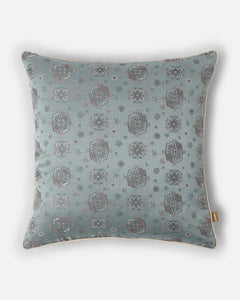
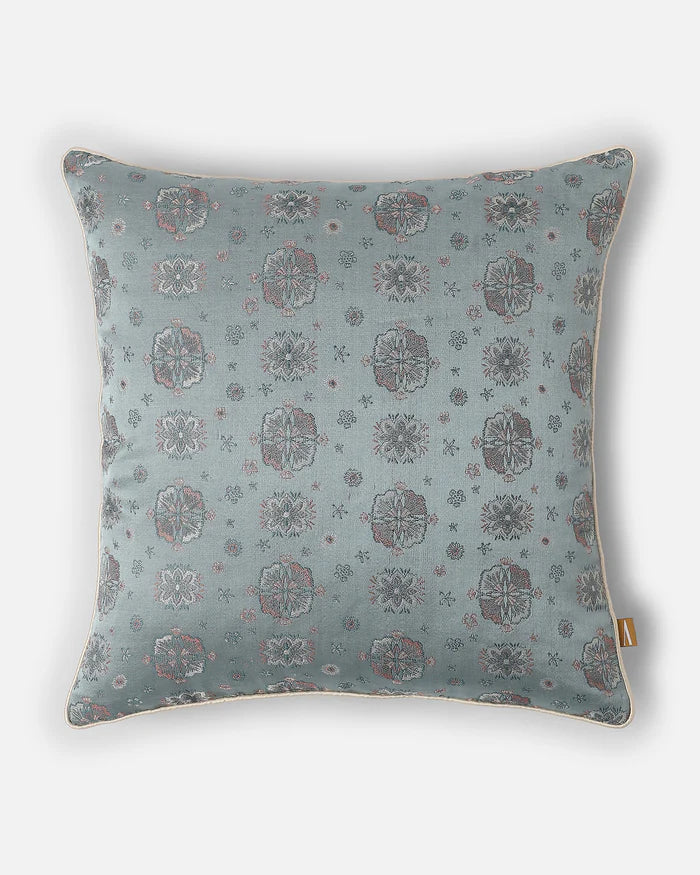
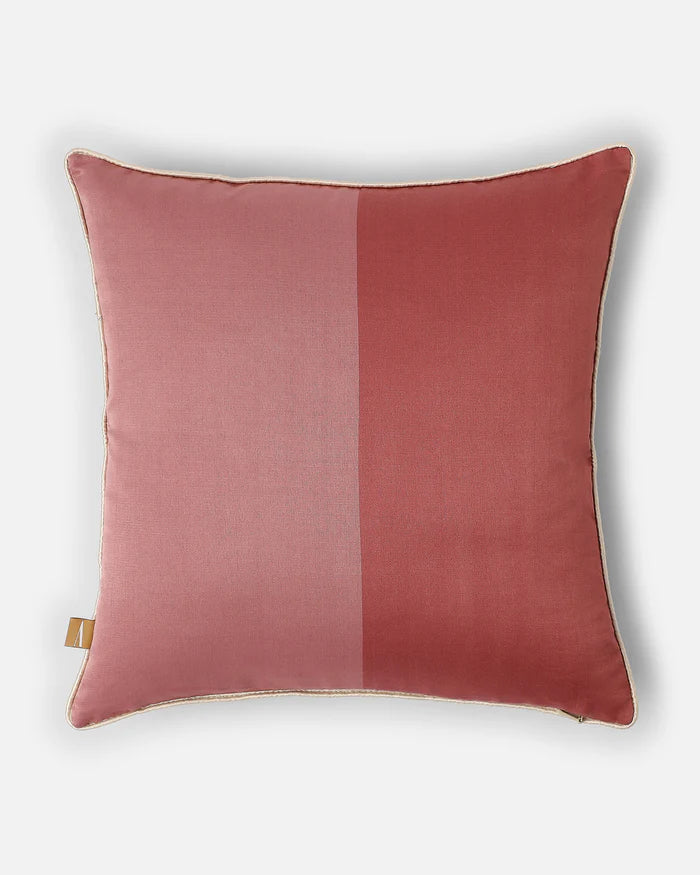
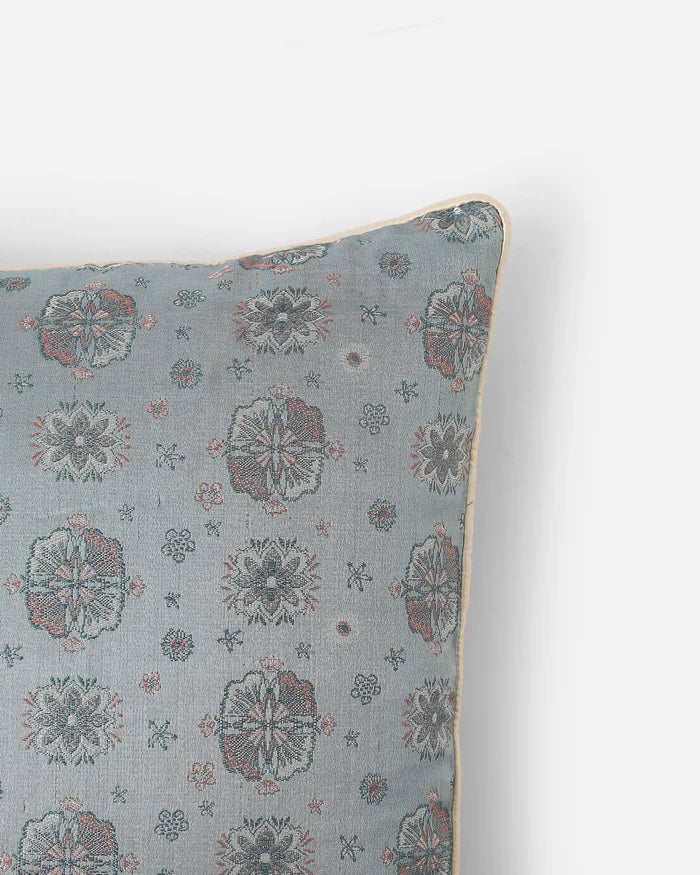
Handwoven in Varanasi, this Tanchoi silk pillow cover sets soft floral medallions into serene powder-blue silk – each motif woven into the satin-fine mulberry silk on the loom, never printed. It reverses to two-tone rose-terracotta silk. Tanchoi is the intricate Banarasi weave brought to Varanasi by Chinese master weavers along the old silk routes, prized for detailing this delicate.
A dual-sided, individually woven pillow cover in limited numbers – calm blue on one face, warm rose on the other – a fresh housewarming or hostess gift, and a throw pillow cover that turns with your room.
Product Details
Provenance
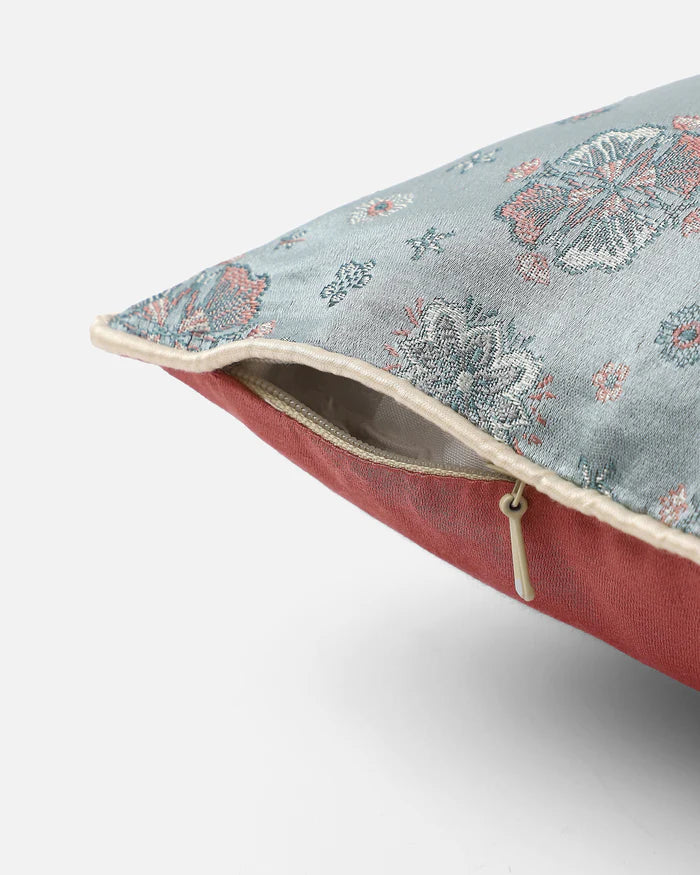
Sold as the cover. Pair with your preferred insert and fill.
Care
Shipping & Returns
Free shipping on all orders to the US and Canada, with duties and taxes covered — no fees on delivery. Express shipping is available at checkout.
Free returns within 30 days; items must be unused and in their original packaging.
Gifting
The Heirloom Experience
Each piece arrives carefully packaged and ready to give, presented in keeping with its provenance. Complimentary gift notes and price-free invoices are available at checkout.
Gift Concierge
Should a gift need exchanging, our concierge will handle it for you. Get in touch.
The Piece
It's a handwoven pure-silk cushion patterned in the Tanchoi technique, where the design is built from multiple coloured silk threads woven into a smooth satin ground — not printed on. The result is a fine, lightweight, lustrous cloth with a remarkably clean finish and a subtle play of colour. It's a refined, tactile piece with a real weaving tradition behind it that brings quiet luxury to a sofa, bed, or chair.
Pure silk. Silk gives Tanchoi its satin sheen, fine drape, and smooth surface; the pattern is formed entirely from coloured silk wefts woven into the silk ground, so the colour and lustre come from the silk itself.
Yes — this silk cushion is dual-sided, with two finished, display-ready faces. One face carries the Tanchoi pattern in full; the other is a solid silk in a complementing colour, so you can turn the cushion to either look. Pairing the pattern with a coordinating plain silk is a deliberate design choice, not a feature of mass-produced cushions.
Craft & Heritage
Yes, entirely. It's handwoven on a traditional handloom in Varanasi — the coloured silk wefts are interlaced into the satin ground on the loom, not printed or applied afterward. Tanchoi is technically demanding, and a finely patterned piece takes considerable time at the loom. Power-loom imitations exist but lack the fineness, supple hand, and clean reverse of genuine Tanchoi.
Tanchoi is a fine silk brocade technique woven in Varanasi (Banaras). According to its widely told history, it reached India in the mid-19th century, when a Parsi merchant sent three weavers from Surat to China to learn satin-brocade weaving from a master named Chhoi — the name combines 'tan' (three, for the brothers) and their teacher's name. First woven in Surat, it later declined there and was revived by the weavers of Banaras, who made it distinctly their own.
Heavier Banarasi brocades like Kimkhab and Gyasar are built up with dense metallic zari, creating a raised, weighty, almost stiff cloth. Tanchoi instead draws its richness from coloured silk wefts woven into a satin ground — producing a smooth, flat, finely patterned surface that is much lighter and more supple. The pattern reads through colour and sheen rather than raised metallic relief.
With Tanchoi, the back of the cloth is the clearest tell. Genuine handwoven Tanchoi has a clean reverse with only very short thread floats, because the technique integrates the wefts into the weave — no long, loose trailing threads, even in complex designs. A printed or power-loom imitation shows hard-edged surface pattern, a blank or messy reverse, and lacks the same softness and drape.
Yes. Banaras Brocades and Sarees hold a Geographical Indication (GI) under Indian law, restricting the name to silk genuinely woven in the Varanasi region using traditional techniques. Tanchoi woven in Banaras falls within this protected tradition, and this piece is woven there. The GI exists to defend authentic Banarasi weaving against widespread power-loom imitations.
Care & Gifting
Dry cleaning is recommended for fine silk. Keep the cushion out of prolonged direct sunlight, which can fade silk over time, and avoid machine or hand washing, which can distort the weave and dull the sheen. Store flat or gently rolled rather than sharply folded. Cared for this way, it will hold its lustre for many years.
Each piece is handwoven in small quantities — there's no mass production, and the weaver's time and the specific silk colourways limit how many can be made. Once a colourway is finished or the weaver moves on, it isn't reproduced. Limited edition simply describes the reality of fine handweaving.
Beautifully. Banarasi silk carries deep ceremonial significance in India and has long been tied to weddings and important occasions, and Tanchoi in particular was prized by connoisseurs for its fineness. As a cushion it brings that heritage home as a refined, lasting object with a genuine story. It ships within 24 hours, arrives gift-ready, and is delivered with duties fully covered for recipients in the US and Canada.
From the Journal
What Is Tanchoi Silk? The Reversible Banarasi Weave
Tanchoi is a fine silk weave from Varanasi (Banaras), India, in which the pattern is built entirely from extra colored silk threads woven...
Read


Powder Blue & Rose Banarasi Silk Pillow
$120 USD