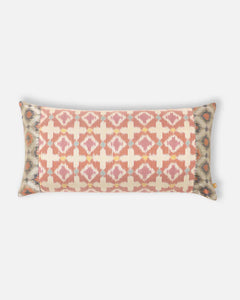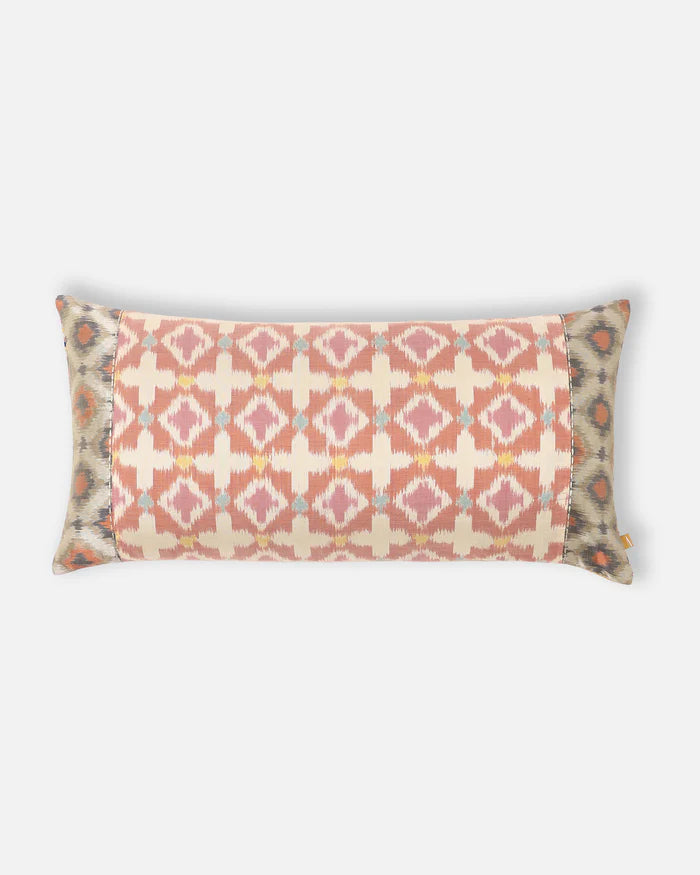
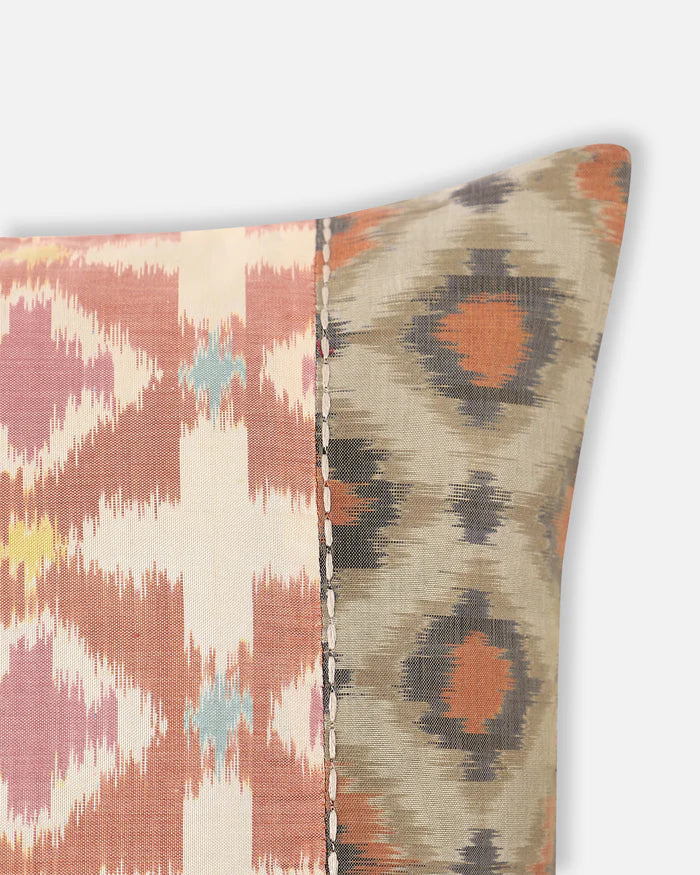
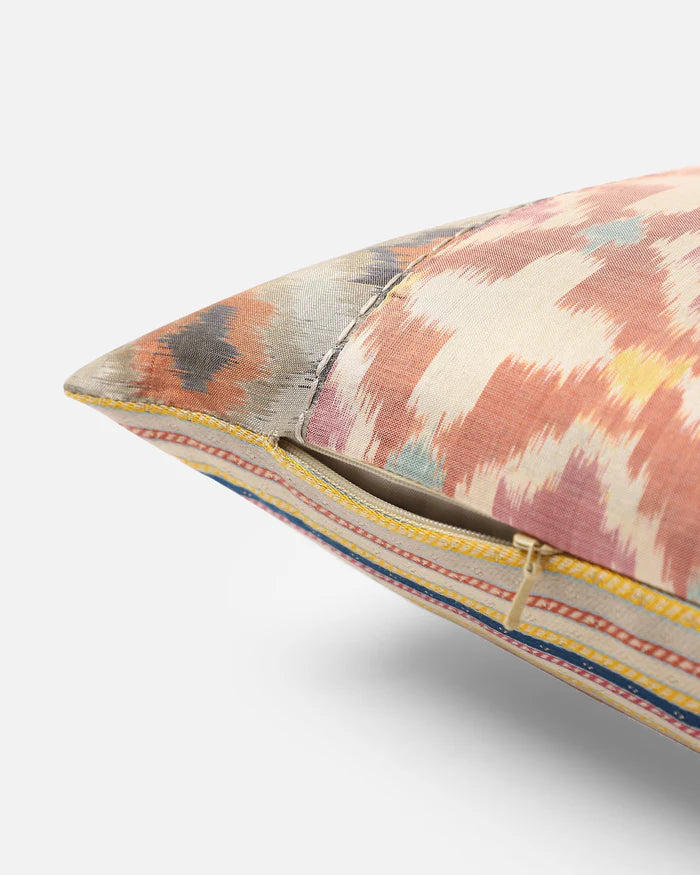
Handwoven in Pochampally, this mulberry-silk lumbar pillow scatters soft blush-pink diamonds across cream silk. The blurred, out-of-focus edge of each diamond is true ikat: every thread tie-dyed before it's woven, never printed – the GI-protected craft of Pochampally.
Individually woven in limited numbers, it brings a quiet, romantic softness to a bed or reading chair – a gentle housewarming, wedding, or new-home gift, and a blush lumbar throw pillow cover that suits almost any palette.
Product Details
Provenance
Sold as the cover. Pair with your preferred insert and fill.
Care
Shipping & Returns
Free shipping on all orders to the US and Canada, with duties and taxes covered — no fees on delivery. Express shipping is available at checkout.
Free returns within 30 days; items must be unused and in their original packaging.
Gifting
The Heirloom Experience
Each piece arrives carefully packaged and ready to give, presented in keeping with its provenance. Complimentary gift notes and price-free invoices are available at checkout.
Gift Concierge
Should a gift need exchanging, our concierge will handle it for you. Get in touch.
The Piece
Its pattern isn't printed on — it's dyed into the threads before the cloth is woven, using the painstaking Ikat resist-dye method. Each bundle of yarn is tied and hand-dyed so that, once woven, the design emerges with the soft, slightly blurred edges that are the signature of true Ikat. The result is a handwoven silk cushion with genuine depth and craft behind it, not a surface print — the quiet richness that holds its own in a beautifully styled room.
Pure silk. The silk gives the cushion its subtle sheen and soft drape, and carries the dyed Ikat pattern with a depth of colour that printed fabric can't replicate.
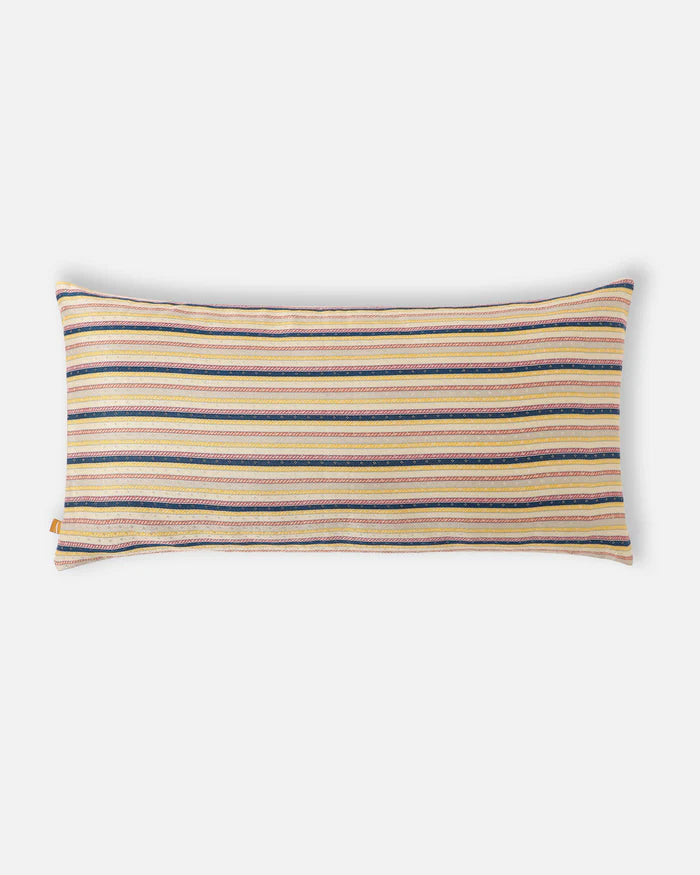
Yes — this silk cushion is dual-sided, with two finished, display-ready faces. One face carries the Ikat pattern in full; the other is a solid silk in a complementing colour, so you can turn the cushion to either look. Pairing the pattern with a coordinating plain silk is a deliberate design choice, not a feature of mass-produced cushions.
Craft & Heritage
Yes, entirely. The threads are hand-tied and hand-dyed, then handwoven on a loom — a process that can take many days for a single piece. Nothing about the pattern is printed or machine-applied.
It's woven in Pochampally, a town in Telangana, India, renowned worldwide for Ikat weaving. Ikat is an ancient resist-dyeing technique in which the design is dyed onto the yarns before they're woven — so the pattern runs right through the cloth rather than sitting on the surface.
Yes. Pochampally Ikat holds a Geographical Indication (GI) under Indian law — reserved for authentic Ikat genuinely woven in the Pochampally region using traditional methods. It's the same kind of legal protection that guards products like Champagne: a mark of verified origin and authenticity.
The tell is the pattern's edges. Genuine Ikat has soft, feathered, slightly irregular edges because the design is dyed into the yarn before weaving, and the pattern shows on both sides of the cloth. A printed imitation has crisp, hard edges and a blank or faded reverse. The gentle imperfection of true Ikat is the proof of the hand behind it.
Care & Gifting
Dry cleaning is recommended for silk. Keep the cushion out of prolonged direct sunlight to protect the colours, and avoid machine or hand washing, which can distort the weave. Cared for gently, it will keep its lustre for years.
Each piece is handwoven in small quantities, and hand-dyeing means slight natural variations make no two exactly alike. Once a colourway or design is finished, it isn't reproduced.
It makes a memorable one — beautiful enough to take pride of place in any home, and carrying a real story as a handwoven, hand-dyed silk from one of India's most celebrated weaving traditions. It ships within 24 hours, arrives gift-ready, and is delivered with duties fully covered for recipients in the US and Canada.
From the Journal
What Is Ikat? The Tie-Dyed Weave, Explained
Ikat is a resist-dyeing technique in which the yarns are tie-dyed to a pattern before they are woven into cloth — so the design lives in ...
ReadCurated Pairings
The Perfect Partner


Blush Diamond Ikat Lumbar Pillow
$110 USD