POCHAMPALLY · IKAT SILK · HANDWOVEN
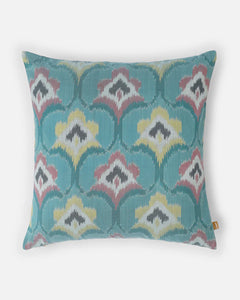
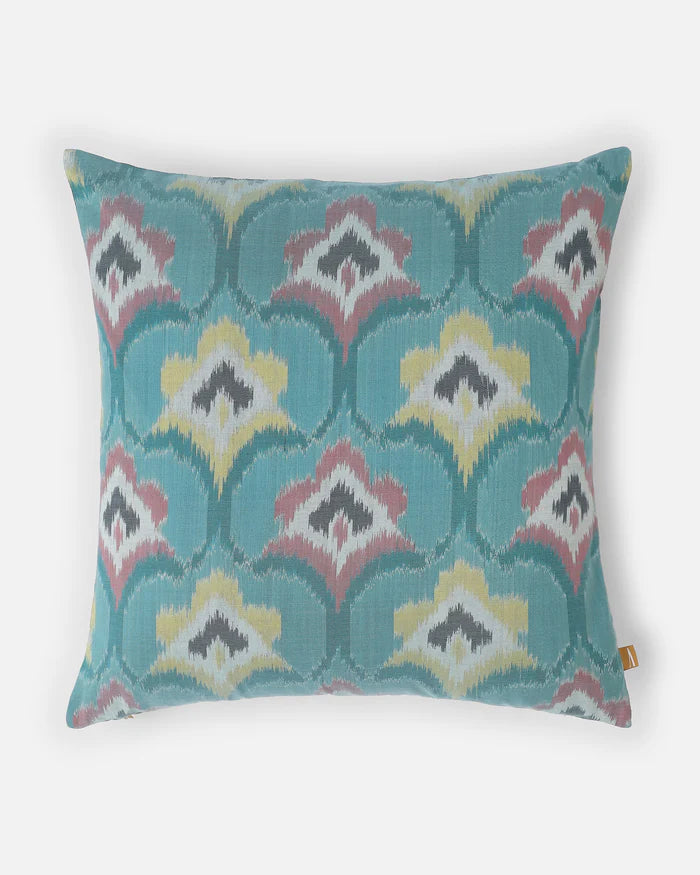
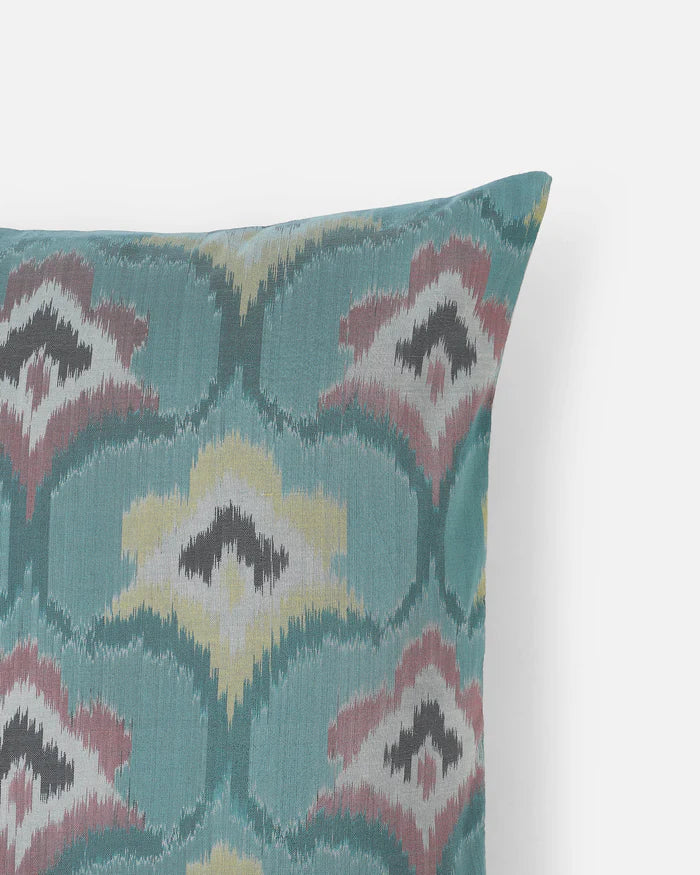
Pastel Blue Ikat Silk Cushion
This item ships in 1–2 business days.
Imagine tying thousands of threads before dyeing them, blind to the final pattern.
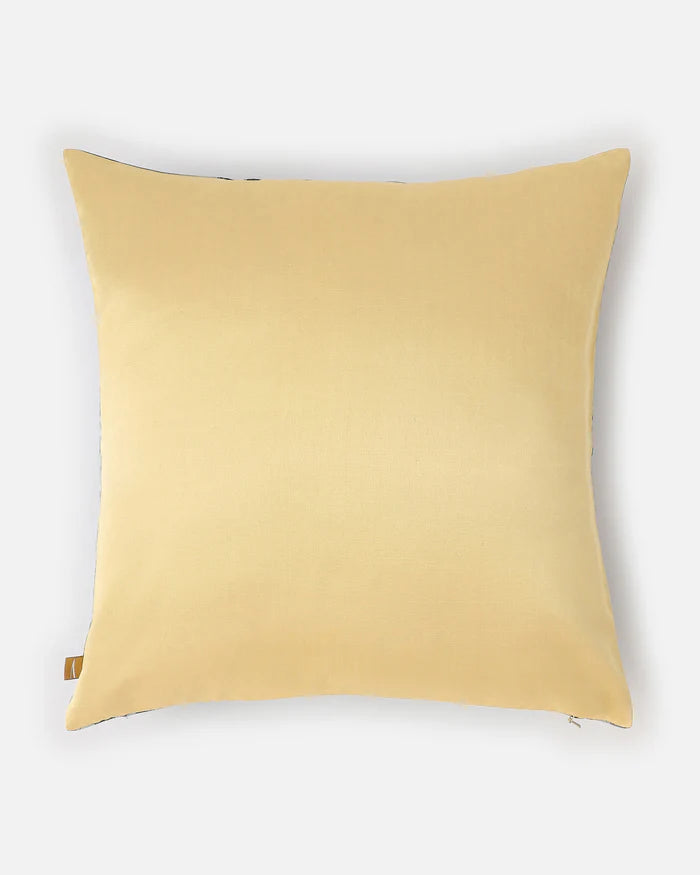
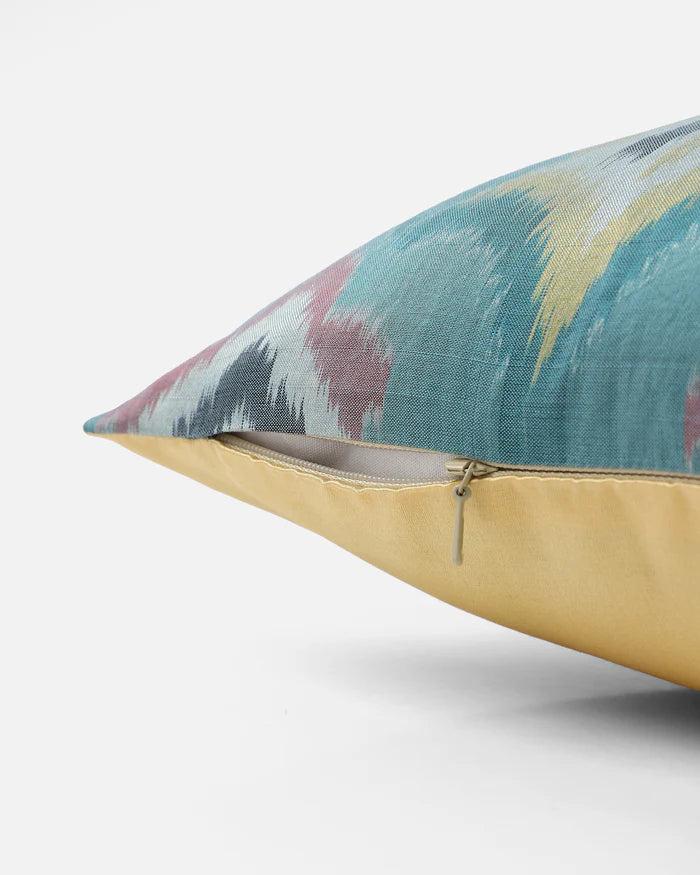
Like solving a puzzle blindfolded, Pochampally artisans resist-dye thousands of threads in a high-stakes wager against the loom. Only when warp meets weft does the gamble pay off: pastel geometry materializes with the soft-focus geometry of authentic Pochampally ikat. The complementing face in butter yellow offers a sunlit surprise.
A testament to textile mastery, this piece is a cornerstone of our silk ikat series.
Product Details
Care
Shipping & Returns
Free shipping on all orders to the US & Canada. Duties and taxes covered — no fees on delivery.
Free returns within 30 days. Items must be unused and in original packaging.
Gifting
The Heirloom Experience: Each piece arrives in signature gift packaging befitting its provenance.
Personalization: Complimentary hand-written calligraphy notes and gift invoices are available at checkout.
Global Concierge: Seamless delivery with all duties pre-paid for the US and Canada.
A customer can exchange a gift. For more details, please contact Customer Service.
The Piece
It's hand-knotted from wool and cotton by skilled weavers in Bhadohi, India — known as the Carpet City — where each knot is tied individually by hand around the warp threads. Machine-made rugs have a flat, uniform appearance and a relatively short lifespan; a hand-knotted rug has depth, resilience, and natural variation in the pile that only hand-work produces. It's the kind of rug that improves with age, anchors a room with genuine weight and warmth, and carries the story of the craft behind it.
A wool pile on a cotton foundation. Wool is warm, naturally resilient, and one of the most durable natural fibres for floor coverings — it bounces back under foot traffic, resists soiling naturally, and ages well. The cotton foundation gives the rug its structural stability and shape.
Yes. Hand-knotted wool rugs are among the most durable floor coverings made — the individual knots and dense pile are designed to withstand decades of everyday use. Living rooms, hallways, and dining areas are well within what this rug is built for. Many hand-knotted rugs from this tradition are still in use after a century.
Each rug is handmade, so there will be slight natural variation between your rug and the product photos — in pile texture, minor colour nuance, or the exact placement of a motif. These are not defects; they're the hallmark of a piece made by hand rather than a machine, and the reason no two are identical. The colours and overall composition will be true to the listing; the variation is in the living detail.
Craft & Heritage
Yes, entirely. Each rug is hand-knotted on a loom — a skilled weaver ties thousands of individual wool knots around the warp threads by hand, row by row, then cuts and levels the pile. It's a slow, skilled process: a finely knotted rug can take weeks or months to complete. Nothing about the pile is machine-inserted or gun-tufted.
A hand-knotted rug is the most labour-intensive and durable construction: each knot is individually tied around the warp threads, giving the pile deep structural attachment and longevity measured in decades. A machine-made rug has pile that is looped or inserted mechanically and lacks the same depth or resilience. A hand-tufted rug uses a tufting gun to push yarn into a backing held together by adhesive — faster to make, but the pile isn't structurally knotted, and the backing can degrade over time. The clearest tell is the back: a hand-knotted rug shows the individual knots clearly; a tufted rug has a flat canvas backing with the glue visible.
It's made in Bhadohi, Uttar Pradesh — known across India as the Carpet City. Bhadohi and the surrounding region have been the centre of India's carpet-weaving industry for generations, producing hand-knotted rugs exported around the world.
Yes. The Handmade Carpet of Bhadohi holds a Geographical Indication (GI) under Indian law, a legal protection that certifies rugs as genuinely hand-knotted in the Bhadohi region using traditional methods. The GI was established to distinguish authentic Bhadohi craftsmanship from machine-made and imitation pieces.
Care & Gifting
Rotate the rug every six months to ensure even wear and fading. Vacuum regularly — avoid the fringe and use low suction — to lift dirt from the pile without damaging it. Blot spills immediately with a clean cloth, working from the outside in, and avoid rubbing. For a thorough clean, have it professionally cleaned by a rug specialist rather than a standard carpet cleaner. Avoid sustained contact with direct moisture.
Yes, initially — and this is completely normal. New wool rugs shed some loose fibres in the first weeks to months of use, as short fibres settle out of the pile after weaving. Regular vacuuming speeds up the process. Shedding diminishes significantly once the loose fibres work out, leaving a denser, more settled pile. It isn't a sign of poor quality; it's the nature of natural wool.
Yes, strongly recommended on hard floors. A rug pad keeps the rug from slipping (safety and floor protection), adds cushioning underfoot, and reduces friction wear on the rug's foundation. Choose a pad cut roughly an inch smaller than the rug on each side. Avoid rubber-backed pads on certain hardwood finishes, as they can discolour the wood over time — a felt-and-rubber combination works well on most hard surfaces.
It's a statement one. A hand-knotted wool rug is one of the most considered things a home can receive — genuinely beautiful, built to last decades, and rich in provenance. It makes an especially meaningful gift for a new home or a freshly decorated room. It ships within 24 hours, arrives gift-ready, and is delivered with duties fully covered for recipients in the US and Canada.
From the Journal
The Blindfold Bet: Decoding the Mathematical Magic of Ikat
There are patterns that are printed, and then there are patterns that are prophesied.
ReadCurated Pairings