

-
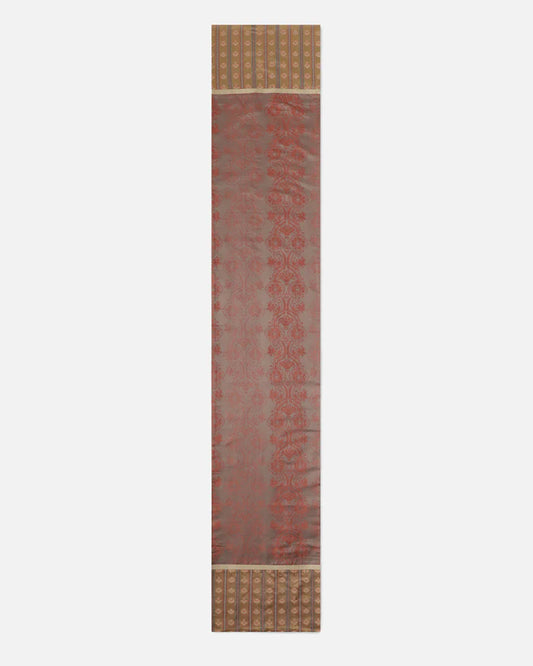
Moonlit Rose Gold Tanchoi Silk Table Runner
Regular price $180 USDRegular price -
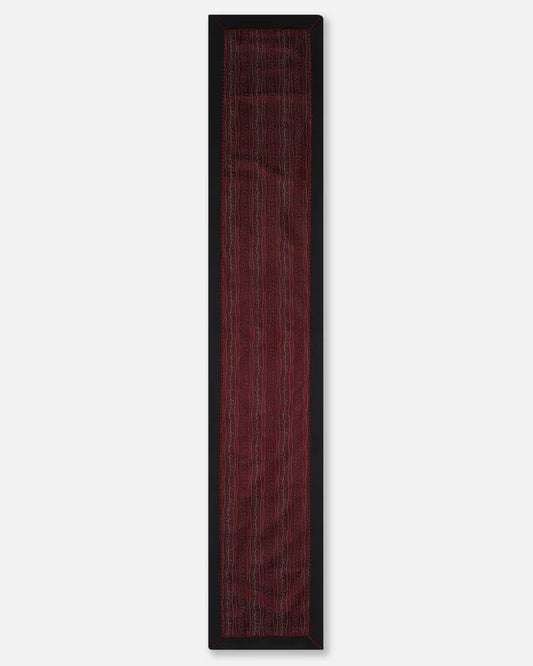
Bordeaux Red Banarasi Silk Table Runner
Regular price $210 USDRegular price -
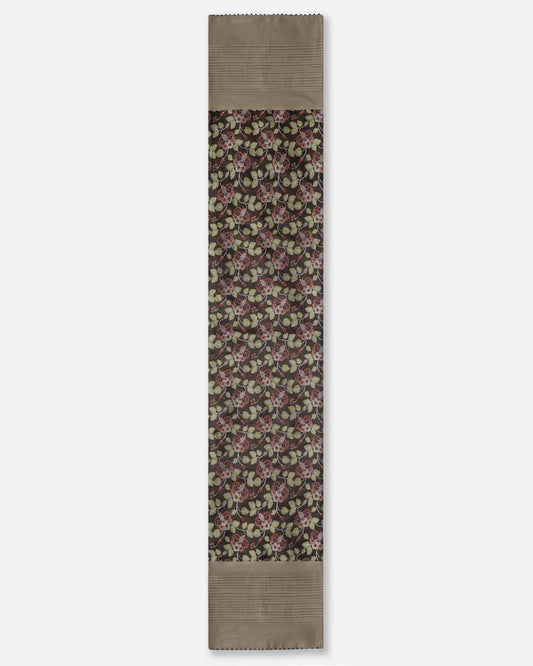
Midnight Garden Banarasi Silk Table Runner
Regular price $240 USDRegular price -
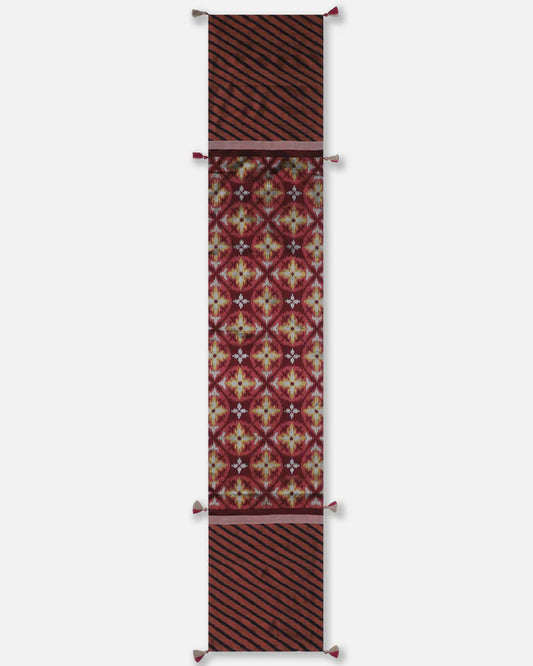
Oxblood Ikat Silk Table Runner
Regular price $160 USDRegular price -
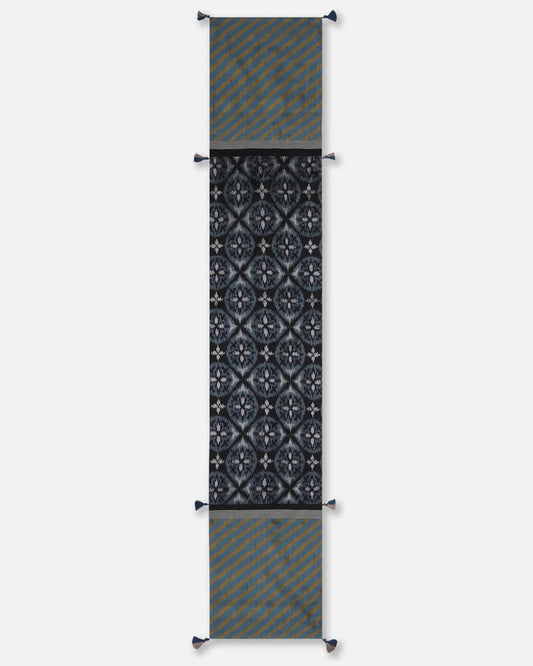
Indigo Ikat Silk Table Runner
Regular price $160 USDRegular price





Discover other Collections
-

Tanchoi Silk
Tanchoi silk pillows and table runners hand-loomed in Varanasi, with botanical florals...
-

Ikat Silk Cushions & Table Runners
Ikat silk pillows and table runners hand-loomed in Pochampally using the double-ikat...
-

Hand-Knotted Rugs
Hand-knotted luxury rugs made knot by knot by heritage artisans – thousands...


Common Questions
What is the difference between Tanchoi and Ikat silk table runners?
Tanchoi silk runners are woven in Varanasi and feature dense botanical florals built into the fabric using a 19th-century Banarasi technique, with no long floating threads on the reverse. Ikat runners are woven in Pochampally using a double-ikat method, in which both the warp and weft threads are resist-dyed before weaving begins, so the pattern appears on both faces with a soft, feathered edge. In both cases the motif is woven into the cloth thread by thread rather than printed onto the surface.
What is Tanchoi silk?
Tanchoi is a Banarasi silk-weaving technique from Varanasi with a satin or twill base and a richly patterned supplementary weft. The pattern — usually dense botanical florals or birds — is woven into the structure of the cloth with no long floats on the reverse, so the fabric is smooth on both sides. It is one of the most labour-intensive Banarasi weaves and is said to have reached Varanasi via Parsi traders who learned it from Chinese weavers in the 19th century.
How is an Ikat table runner made?
Ikat is made by resist-dyeing the yarn before weaving. Sections of thread are bound so they resist the dye, the yarn is dyed, and the pre-dyed threads are then aligned on the loom so the pattern emerges as the cloth is woven. In the double ikat practised in Pochampally, both warp and weft are resist-dyed and must be aligned precisely during weaving — the slight feathered edge to the motifs is the signature of genuine hand ikat.
What size table runner do I need?
As a general guide, a table runner should overhang each end of the table by roughly 6 to 12 inches. The lengths Home and the World offers suit standard four-to-eight-seat dining tables and also work across a console, sideboard, or dresser. Exact dimensions are listed on each product page, and because each runner is handwoven, length and width carry the slight variation typical of genuine handloom cloth.
How do you clean a silk table runner?
Handwoven silk runners should be spot-cleaned or dry-cleaned to protect the zari thread and the hand-dyed yarn, and kept out of prolonged direct sunlight to preserve colour. Blot spills immediately rather than rubbing. Full care instructions are included with every order, and treated with reasonable care a woven silk runner holds its pattern and colour for years.
How do you style a silk table runner?
A runner does the most work when it contrasts with the table beneath it — the sheen of Tanchoi silk against raw wood, or a saturated Ikat against a pale linen cloth. Centre it down the length of the table for everyday use, or run it across the width for a layered place-setting look. It pairs naturally with matching silk cushions to coordinate a room.
Do the table runners ship free and how quickly?
Yes. All orders ship free to the US and Canada with all duties covered, so the listed price is the final price. Most in-stock runners ship within 2–5 business days. Each runner is limited edition and handwoven in Varanasi or Pochampally, which makes it a popular housewarming and wedding gift.