

-
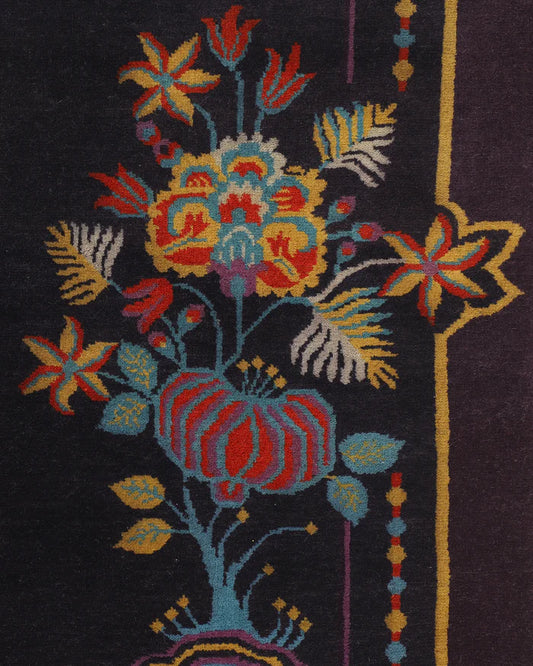
Violet Nocturne Rug
Regular price $1,600 USDRegular price -
Anār Pomegranate Rug
Regular price $890 USDRegular price -
Earth Loom Soumak Rug
Regular price $940 USDRegular price -
Shalimar Soumak Rug
Regular price $940 USDRegular price -

 Sold out
 -
The Bhadohi Heritage Rug
Regular price $1,600 USDRegular price -
Soumak Geometrica Rug
Regular price $980 USDRegular price -
Samudra Hand-knotted Rug
Regular price $1,700 USDRegular price -
Panja-woven Chronicle Rug
Regular price $940 USDRegular price -
Artisan's Grid Rug
Regular price $900 USDRegular price -
Midnight Slate Rug
Regular price $1,400 USDRegular price -
Desert Knot Rug
Regular price $1,200 USDRegular price -
Geometric Earth Rug
Regular price $880 USDRegular price$0 USDSale price $880 USD -
The Understory Rug
Regular price $980 USDRegular price -
The Guardian Rug
Regular price $980 USDRegular price -
The Orion Rug
Regular price $980 USDRegular price









Discover other Collections
-

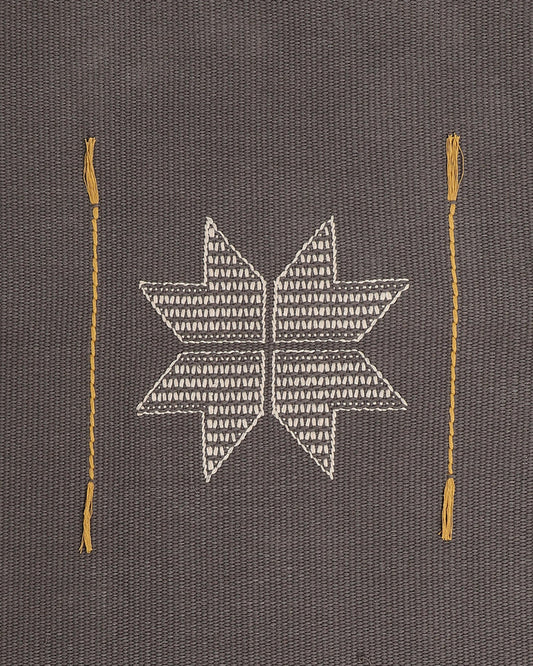
Tanchoi Silk
Tanchoi silk pillows and table runners hand-loomed in Varanasi, with botanical florals...
-

Ikat Silk Cushions & Table Runners
Ikat silk pillows and table runners hand-loomed in Pochampally using the double-ikat...
-

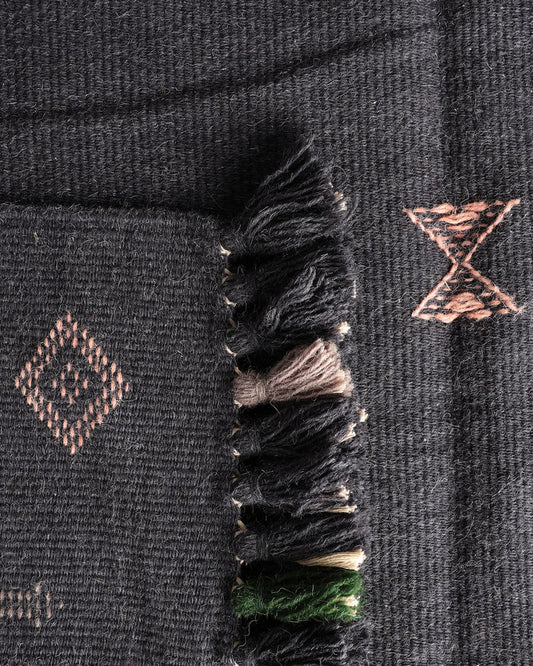
Hand-Knotted Rugs
Hand-knotted luxury rugs made knot by knot by heritage artisans – thousands...


Common Questions
What is a hand-knotted rug?
A hand-knotted rug is made knot by knot — thousands of individual knots per square foot, each tied by hand around the warp threads, building the pattern row by row across months of work. It is the most labour-intensive and most durable rug-making method; a well-made hand-knotted rug lasts for decades and is frequently passed down. Because it is built by hand rather than tufted or printed, every piece is inherently one of a kind.
What is the difference between hand-knotted, hand-tufted, and machine-made rugs?
In a hand-tufted rug, yarn is punched into a pre-printed backing with a tool and held with glue — faster, far less durable, and not reversible. A machine-made rug is power-loomed in hours. A hand-knotted rug uses no glue or structural backing; the knots themselves form the rug, which is why it can be repaired and re-fringed and survives generations of use. Hand-knotting is the most time-consuming and highest-quality of the three methods.
What is a Soumak rug?
Soumak is a flat-weaving technique in which the weft yarn is wrapped around the warp threads rather than knotted, producing a dense, durable, low-pile surface with no fringe of cut knots. It is stronger and flatter than a knotted pile rug and shows a distinctive braided or herringbone texture on the front. Home and the World's rug collection includes several Soumak pieces alongside its hand-knotted rugs.
What is knot density and why does it matter?
Knot density is the number of knots per square inch or square foot and is a measure of how finely a rug is woven. A higher knot count allows finer detail in the pattern and generally indicates more hand-work and greater durability, while a lower count suits bolder, more geometric designs. It is one signal of quality among several — the wool, the dye, and the weaving consistency matter just as much.
How long does it take to make a hand-knotted rug?
A single hand-knotted rug typically takes months of continuous work, because every one of the thousands of knots per square foot is tied individually by hand. Larger or more finely knotted rugs can take longer still. This is why hand-knotted rugs are limited edition and why each one is considered an heirloom rather than a furnishing.
Why is every hand-knotted rug one of a kind?
Because the rug is built knot by knot by hand rather than printed or machine-woven, the exact tension, knot placement, and natural variation in the hand-dyed wool can never be precisely repeated. Two rugs of the same design will differ subtly in colour and texture. That inherent uniqueness is part of what distinguishes a hand-knotted rug from a mass-produced one.
How do you care for a hand-knotted wool rug?
Vacuum without a rotating beater bar, rotate the rug periodically so it wears evenly, and use a rug pad underneath to reduce friction. Blot spills immediately rather than rubbing, and have the rug professionally cleaned every few years. Treated this way, a hand-knotted wool rug improves with age and can outlast the room it was bought for. Full care guidance ships with every order.
Do the rugs ship free, and are they made to last?
Yes. All orders ship free to the US and Canada with all duties covered, so the listed price is the final price. Each rug is limited edition and made by heritage artisans in India. Hand-knotted construction is the most durable rug-making method, so a well-cared-for piece lasts for decades and is frequently passed down.